🌿 Spot & Stop Four Invasive Plants
Northwest & central Connecticut · Learn to recognize them, then help stop their spread
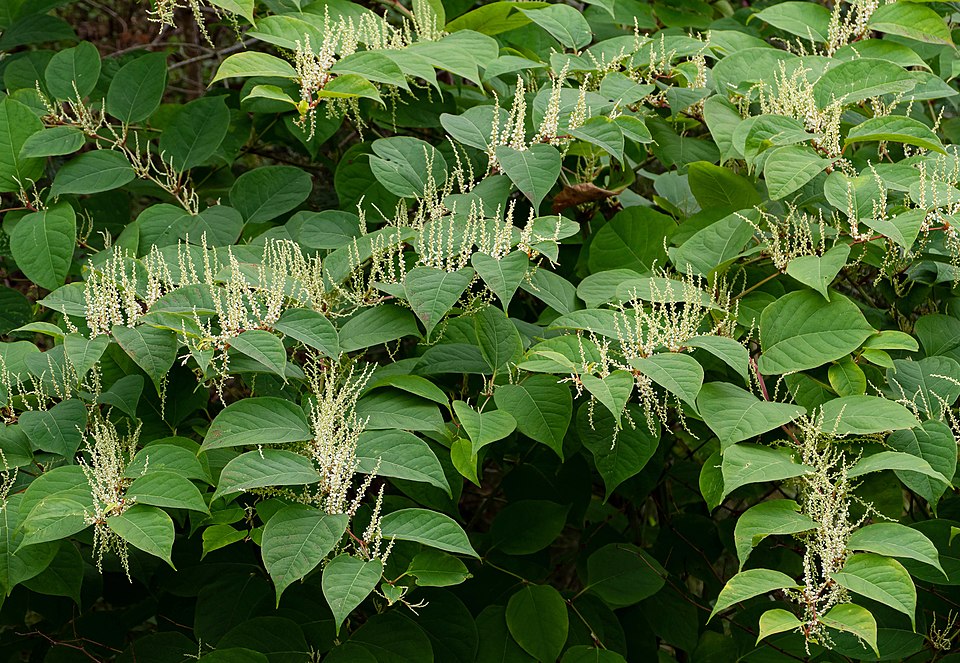
Japanese knotweed
Reynoutria japonica
- Bamboo-like hollow, reddish stems, 4-10 ft tall
- Broad, shovel/heart-shaped leaves in a zig-zag pattern
- Sprays of tiny creamy-white flowers in late summer
- Forms dense thickets, often by roads and streams
Where to look: roadsides, stream banks, and disturbed, damp ground.
What to do: Never cut-and-leave, mow, or compost
it (fragments resprout). Report large stands and get professional help.
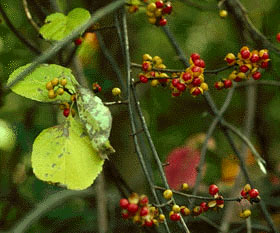
Oriental bittersweet
Celastrus orbiculatus
- Woody vine that twines up and strangles trees
- Round, finely toothed leaves
- Berries grow along the stem; yellow capsules split to show red insides in fall
Where to look: forest edges, fence lines, and roadside thickets.
What to do: Cut climbing vines at the base; pull
small plants. Bag the berries and never use the vines for wreaths or décor.
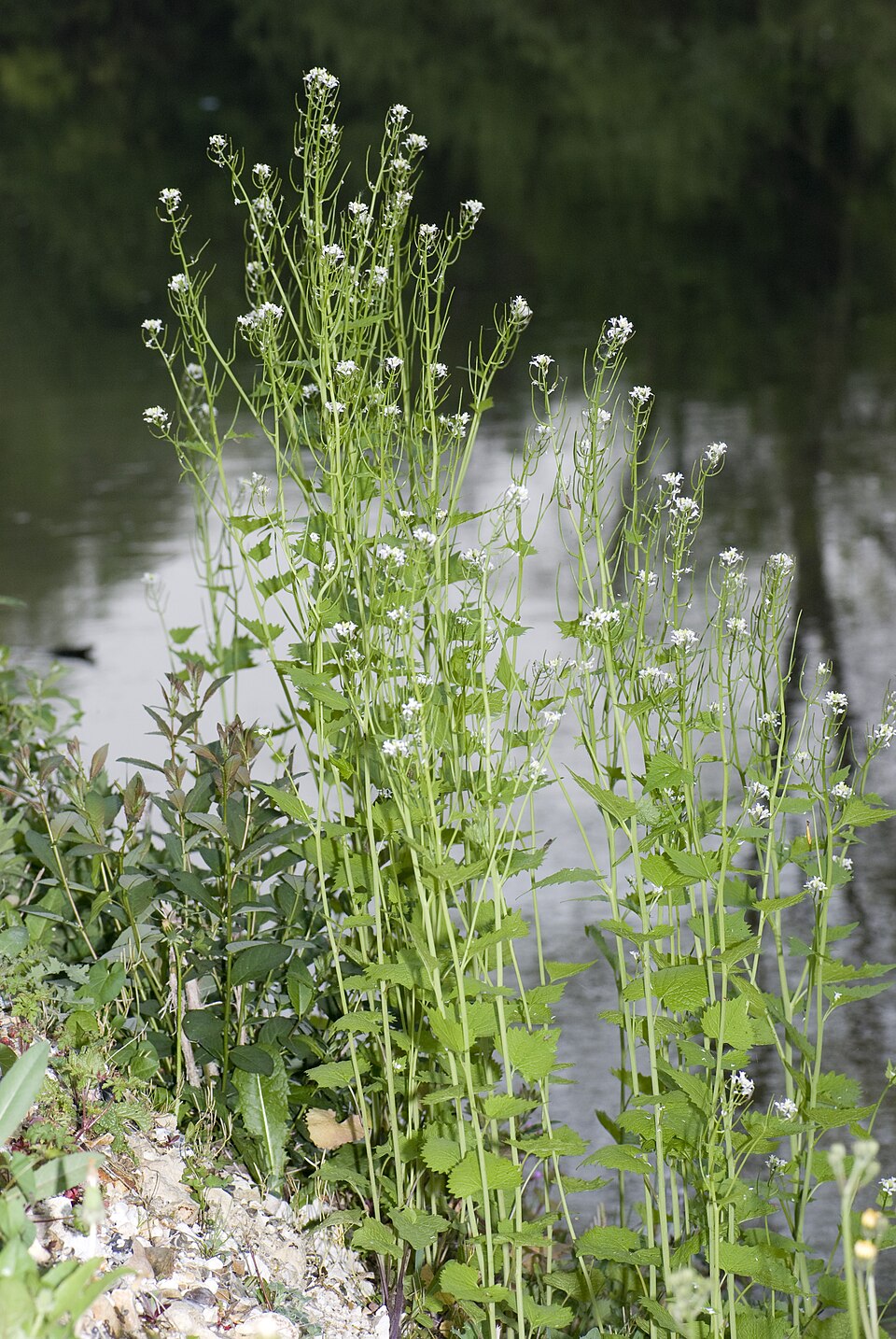
Garlic mustard
Alliaria petiolata
- Year 1: low rosette of round, scalloped leaves
- Year 2: 1-3 ft stalk with small 4-petal white flowers in spring
- Triangular, toothed leaves that smell like garlic when crushed
Where to look: shaded trail edges, woodlands, and yard borders.
What to do: Pull it (whole root) before it
flowers, then bag and trash it. Do not compost it, and revisit the spot each year.
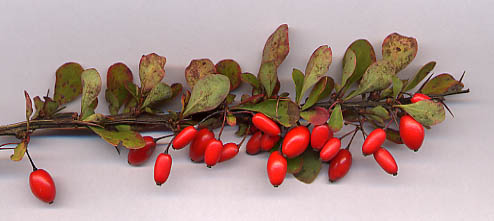
Japanese barberry
Berberis thunbergii
- Spiny shrub, 2-8 ft; small oval leaves in tight clusters
- One sharp spine per cluster; bright yellow inner wood
- Red oblong berries in fall and winter; leafs out very early in spring
Where to look: forest understory, edges, and old fields.
What to do: Pull or dig it out (wear thick gloves)
and bag the berries. Clearing thickets also lowers local tick numbers.
Report a sighting: iNaturalist or EDDMapS app ·
Clean boots & gear between sites ·
Plant native, not these
All four are prohibited in Connecticut.
Created by Sophie Yang · CT Invasives · Connecticut
Created by Sophie Yang · CT Invasives · Connecticut